
Varicose veins affect women and men. Vein exercises can help prevent them
With input from MUDr. Anton Karalko, vascular surgeon.
Varicose veins affect up to 40 percent of women and 20 percent of men. In 90 percent of cases they are hereditary, but they can also appear in connection with hormonal changes, an unhealthy lifestyle or age. There are several ways to prevent varicose veins. One of the lesser known is vein exercise.
Varicose veins are not just a cosmetic problem; they are often accompanied by pain, swelling and cramps. "Varicose veins are enlarged, twisted, usually bluish-purple veins that most often appear on the legs. They develop when the venous valves, which normally prevent blood from flowing backwards, are weakened or damaged. When the valves do not work properly, blood pools in the veins, which leads to their widening and visible changes. Varicose veins are not only unsightly; they also come with pain, heavy or burning legs, swollen legs especially after standing for a long time, night cramps or itchy skin around the veins. In advanced stages, skin changes and leg ulcers can develop," warned Anton Karalko, vascular surgeon and head physician at Venova Clinic.
A higher risk of varicose veins comes from genetic predisposition, hormonal changes or lifestyle. "Genetics has a major influence on varicose veins. If your parents or grandparents had them, they are more likely to appear in the next generations too. People with obesity very often have problems with varicose veins, because excess weight increases pressure on the veins and worsens blood circulation. People with little physical activity are also at risk, because lack of movement weakens the leg muscle pump that helps the veins push blood back to the heart. Varicose veins can also be caused by hormonal imbalance, for example during pregnancy, menopause or when taking hormonal contraception. Their occurrence is related to age: from around fifty the vein walls and valves weaken, which makes varicose veins more likely. People whose jobs require long periods of standing, which increases the pressure in the veins of the legs, also have problems," the surgeon listed.
Exceptionally, varicose veins can appear in children or during adolescence. "Although it is not very common, varicose veins can affect people at a very young age. Especially during puberty, body weight and height change quickly, which can strain the vascular system. Recently we had Mr Libor in our clinic, who had suffered from hereditary varicose veins since puberty. They first brought him to a doctor at the age of twenty, when he was sent to hospital for a procedure and his varicose veins were partly removed. As he got older, however, the problem began to return. At 56 he came to our clinic, where we removed his varicose veins by crossectomy combined with sclerotherapy of the great saphenous vein. This means the doctor surgically cuts the main connection between the superficial and the deep vein in the groin to stop the backward blood flow that causes varicose veins. Then a substance is injected into the damaged vein that 'seals' it from the inside and closes it, so blood no longer flows through it and the body finds another, healthy route," described Anton Karalko.
Varicose veins may be linked to other diseases, especially disorders of blood circulation and the vascular system. "Varicose veins can signal chronic venous insufficiency, a long-term condition in which blood returns poorly from the legs back to the heart. They can also be related to deep vein thrombosis, a blood clot that occurs mainly in the legs. It is important to discuss the situation with a doctor, because comprehensive treatment may be needed, not only of the varicose veins themselves but also of the other disease," recommended Anton Karalko.
Are varicose veins bothering you? Book an initial examination and we will find the best solution for you.
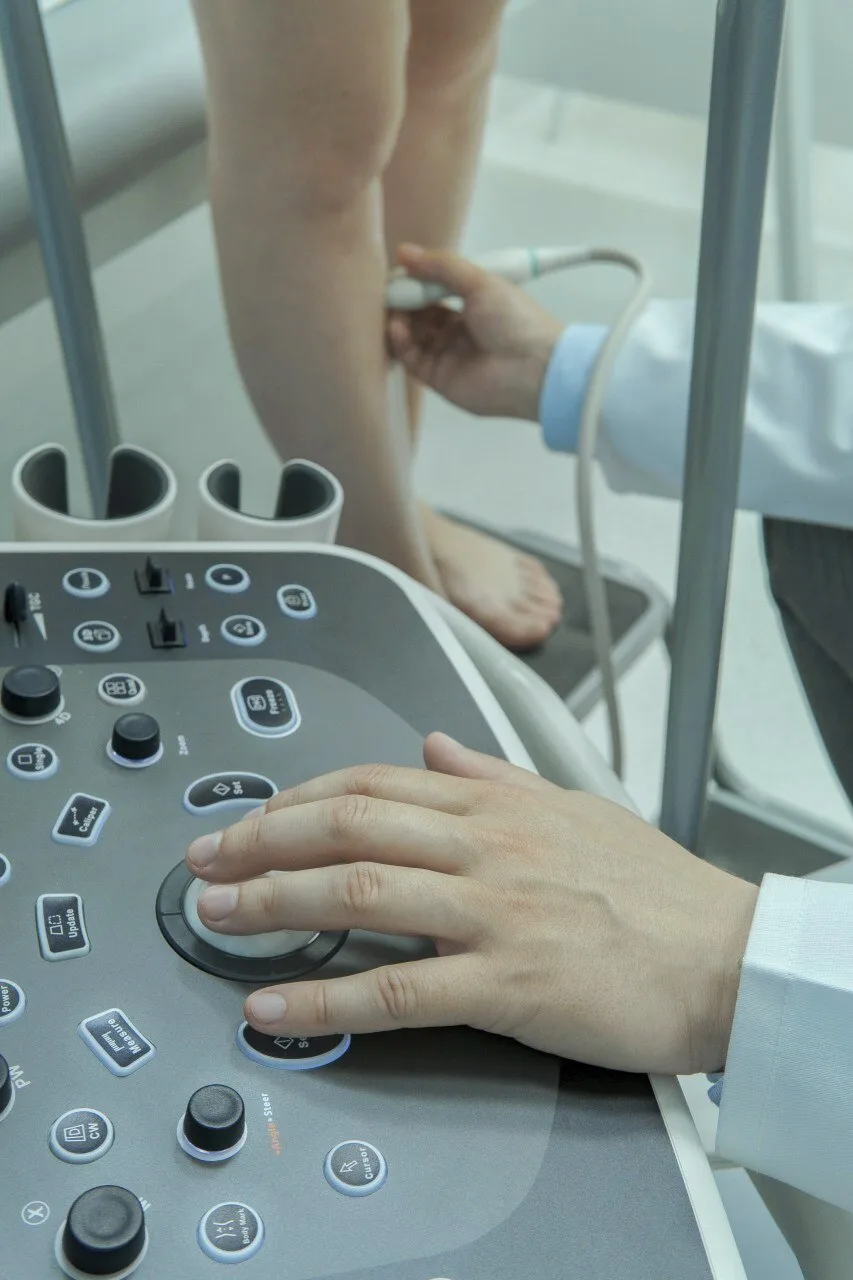
A vascular specialist performs an ultrasound examination of the veins, which helps to find out how the veins work and whether treatment is needed. Depending on how serious the problem is, they may recommend different treatment options. "Today's medicine offers several ways to get rid of varicose veins, both traditional and modern. Conventional surgery is still performed in hospitals and consists of cutting and tying off the connection between the superficial and the deep vein. This method is suitable mainly for severe cases, but it requires a longer recovery. Modern minimally invasive methods, on the other hand, allow patients to recover faster with less pain. They include laser treatment, in which the veins are closed using laser heat. Another is radiofrequency thermocoagulation, a method that uses radiofrequency energy to close the affected veins. Another method is sclerotherapy with sclerosing foam, which closes the veins mechanically. Medical glue is also used to physically close veins. A frequently used method is CLaCS, a combined laser and sclerotherapy treatment used to remove spider and reticular veins, which combines laser therapy with cooling for maximum effect. ClariVein is another modern method; it uses a mechanochemical technique to close veins. A special catheter rotates inside the vein, which causes it to close, while a sclerosing agent is applied to ensure a long-lasting result. Each of these modern methods is minimally invasive, which means patients return quickly to normal life without a long recovery. Which procedure is suitable depends on the severity of the problem and the specialist's recommendation," described Anton Karalko.
Varicose veins can be prevented. Prevention includes regular exercise, avoiding long periods of standing or sitting, wearing compression stockings, watching your weight, a healthy lifestyle and vein exercises. "Vein exercise is a simple and effective way to prevent varicose veins, based on activating the calf muscles. The calf muscles play a key role in venous circulation: when they move, they compress the veins and help blood return to the heart, which helps prevent it from pooling in the legs," the doctor concluded.
How to do vein exercises
- Heel and toe raises: sitting or standing, lift your heels and then your toes to stimulate blood circulation.
- Walking on your toes and heels: strengthens the muscles and improves the venous pump.
- Ankle circles: lying down or sitting, rotate your feet in circles for better blood flow.
- Cycling: lying on your back, imitate pedalling, which activates the calf and thigh muscles.