
Gallbladder surgery
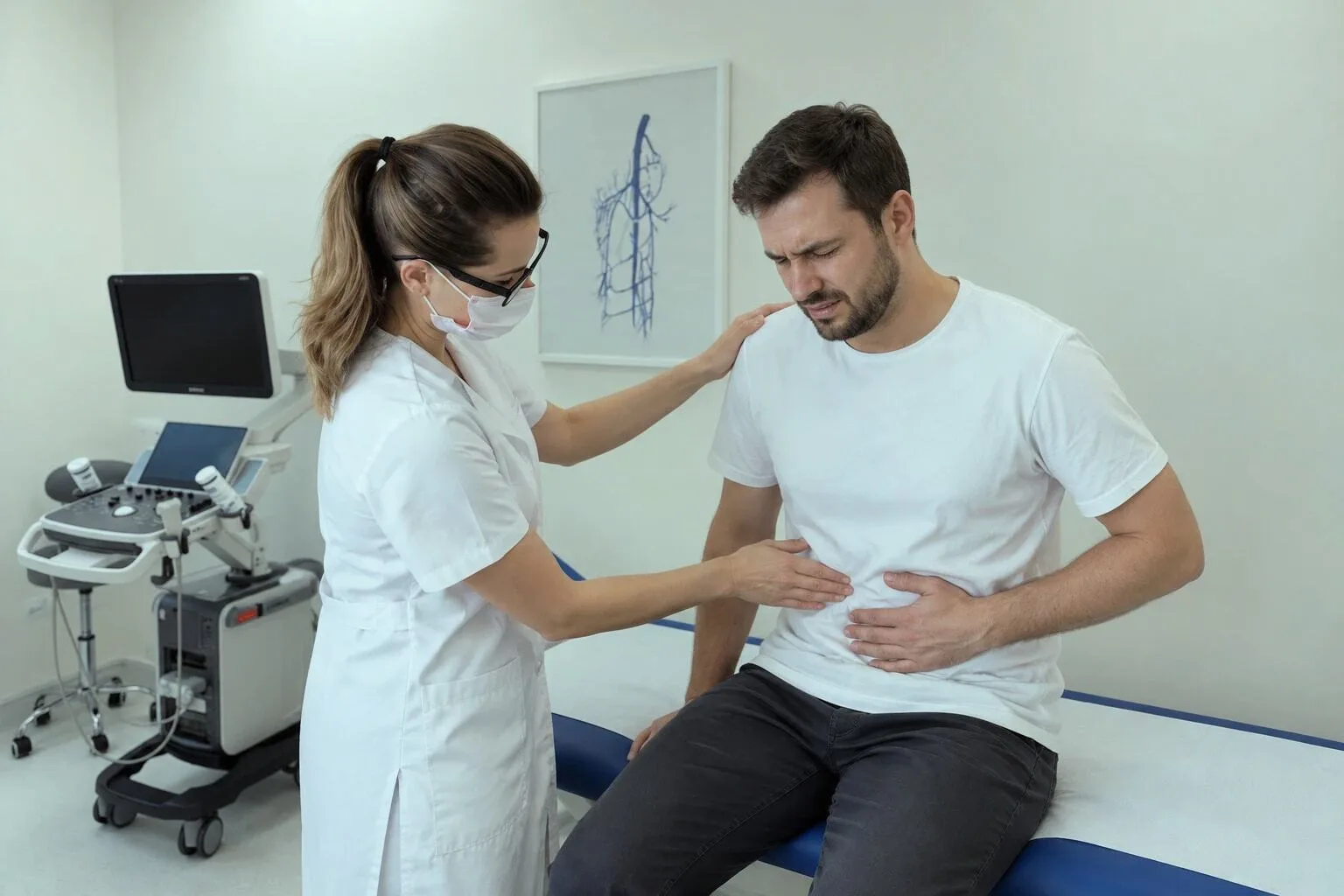
Recurring pain after fatty meals is often caused by gallstones. The surgeon assesses whether an operation is right for you. The consultation is free and needs no referral.
- Free consultation
- No referral needed
- Surgery covered by insurance
Health insurers
We arrange follow-up surgical care covered by these insurers:
 VZPVšeobecná zdravotní pojišťovna
 ZPMVZdravotní pojišťovna Ministerstva vnitra ČR
 ČPZPČeská průmyslová zdravotní pojišťovna
 OZPOZP zdravotní pojišťovna
 ZPŠZaměstnanecká pojišťovna Škoda
 RBPRBP zdravotní pojišťovna
 VoZPVojenská zdravotní pojišťovna ČR
What does the gallbladder do, and why is it removed?
The gallbladder is a small pouch beneath the liver that stores bile, a fluid made by the liver that helps digest fat. It concentrates the bile and releases it into the intestine during meals. It is not essential for life: after removal, bile flows directly from the liver into the intestine, and most people live normally, including eating a normal diet.
Gallstones are the most common reason for an operation. They form when components of bile crystallise and may cause no symptoms for a long time. Problems begin when a stone blocks the gallbladder duct.
Symptoms of gallbladder problems
- Biliary colic – sudden, severe pain under the right ribs or breastbone, often spreading to the back or right shoulder blade, typically after a fatty meal or at night.
- Nausea and vomiting
- Bloating, pressure and fullness after meals
- Difficulty tolerating fatty food
A stone that permanently blocks the duct can cause gallbladder inflammation: the pain persists, fever develops and prompt treatment is needed. A stone can also enter the bile duct and cause jaundice or pancreatitis. For recurring symptoms, planned removal is therefore recommended before complications arise.
How treatment works at Venova
Surgeon consultation – free, with no referral required
The doctor reviews your symptoms and previous test results, usually an abdominal ultrasound, and assesses whether surgery is appropriate. You do not need a referral from another doctor.
Treatment planning
We agree on a date, explain the operation, possible risks and recovery, and tell you where to arrange your preoperative assessment.
Operation
We usually operate laparoscopically under general anaesthesia. Medically indicated surgery is covered by public health insurance.
Follow-up after surgery
You return to our team at Venova Clinic for your follow-up visit.
How the operation works
Gallbladder removal, or cholecystectomy, is usually performed laparoscopically. A camera and instruments are inserted through several small incisions, and the surgeon operates while viewing a monitor. Compared with open surgery, this usually means less pain, smaller scars and a quicker return to everyday activities.
- Anaesthesia: general
- Operation length: usually 45–90 minutes
- Payment: medically indicated surgery is covered by public health insurance.
After gallbladder surgery
Most patients return to ordinary activities within the first few days. A lighter, lower-fat diet is recommended for several weeks while digestion adjusts. Most people then return to a normal diet without restrictions. Your surgeon will give you advice based on how your operation went.
Common patient questions
Can I live without a gallbladder?
Yes. The gallbladder only concentrates and stores bile. After its removal, bile flows continuously from the liver into the intestine. Most people notice no change after recovery.
Will I need to follow a diet after surgery?
A lighter, lower-fat diet is recommended for several weeks while digestion adjusts. Most patients then return to a normal diet without lasting restrictions.
Must gallstones always be treated with surgery?
Not always. Stones that cause no symptoms are often monitored. If pain recurs or inflammation has already occurred, planned removal is safer than waiting for a complication.
Is the operation covered by health insurance?
Yes. If the surgeon recommends an operation after examining you, medically indicated surgery is provided under public health insurance.
Preoperative assessment
Before any operation under general anaesthesia, you need a preoperative assessment. Its scope depends on your health and the planned procedure. It usually includes blood tests, an ECG and a doctor’s assessment of your overall condition.
You can have the assessment with your general practitioner or at Venova Clinic’s general practice. If you prefer to arrange everything in one place, we can help book it during your surgical consultation.
Do not put off a problem that has a solution.Book a consultation with our surgeons.
Choose a consultation time online. If you prefer to speak to someone, give us a call. Our team will help you find a suitable time and answer your questions.